

Seminar Ⅵ - Amusebyfarm
It was December, a time of wrapping up the year and preparing to greet the next, when we visited the farm in Yangpyeong run by An Jeonghwa and Kim Shinbeom. In the fields of winter, the slow season, it might seem like every crop is holding its breath, but unseen lives are sprouting, growing, and moving. Without the help of machinery, the ridges and furrows here are shaped and tended by hand, one shovelful at a time. Fallen leaves, dried grass and stems, peanut shells, and bundles of straw are laid down like a blanket so that no bare earth remains exposed. Climbing up to the rooftop and looking down over the fields, even within the bare winter landscape, the ridges of varying thickness, length, and color seem dear. Perhaps that is one of the charms of a farm that grows wide varieties in small quantities.
As the new year approaches, the two farmers describe how they draw a field map and spend time organizing which crops to plant in each ridge. Looking at the 2017 field map, they planted cherry tomatoes next to tomatoes, with cucumbers taking up half the next ridge and loofah the other half, then peppers and eggplant. In one ridge, over ten crop names were written out in little sections. These were just the ones I could recognize: mallow, native cabbage, red mustard, chard, flat-leaf spinach, red chicory, spiny spinach, vitamin greens, crown daisy, and stonecrop. We looked through photo albums of the fields transforming with the seasons—the plants starting from seeds, sprouting, putting out roots and stems and leaves, flowering, bearing fruit, making seeds again, all the way to the harvest.
This was seed-saving farming: not buying hybrid seeds engineered by large seed companies or purchasing seedlings to plant, but participating in a cycle of receiving, planting, growing, harvesting, and saving native seeds. Small glass jars were each filled with seeds of different colors: the "yellow" series (yellow adzuki, yellow peas, yellow mung beans, yellow-centered black soybeans, and yellow foxtail millet), the "mouse" series (mouse-tooth corn, mouse-tail radish, mouse-eye beans), horse-tooth beans, mouthful peas, and more. Just reading the names aloud or writing them down is already fun.
Sharing warm corn tea and radish tea, tasting five kinds of sweet potato one by one (white, watery, chestnut, squash, honey), we listened to an endless string of stories—about crops, seeds, the work of farming, the journey that had brought them to a farming life, and ways of harvesting, sharing, cooking, and eating. Fun, fun, so much fun.
A life lived away from the vast structures and logic of capital that so easily swallow us whole, and in pursuit of real fun instead. A life rich not with things, but with fun and stories. I want to keep learning how to live such a joyful life.
—Jihee Jun (DCW 2025)
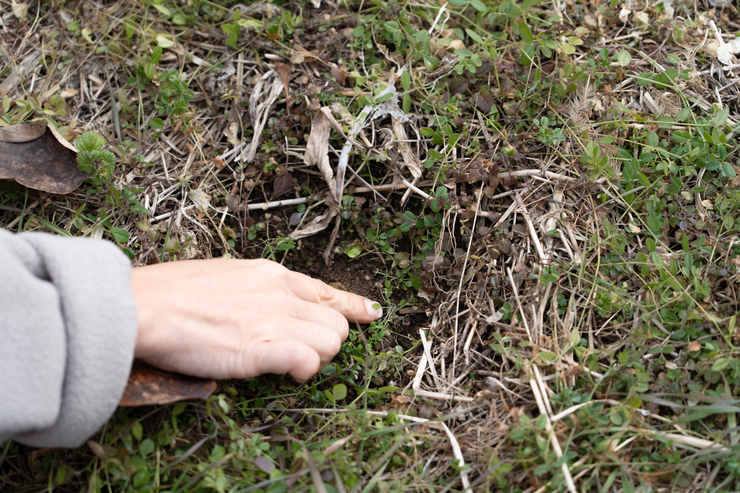
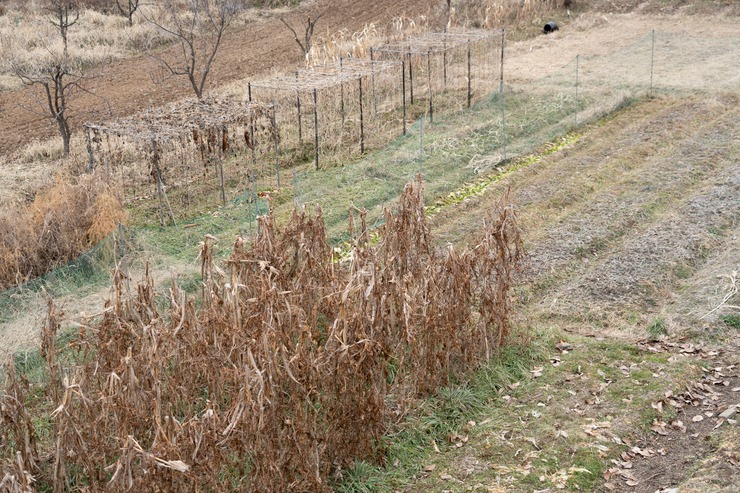
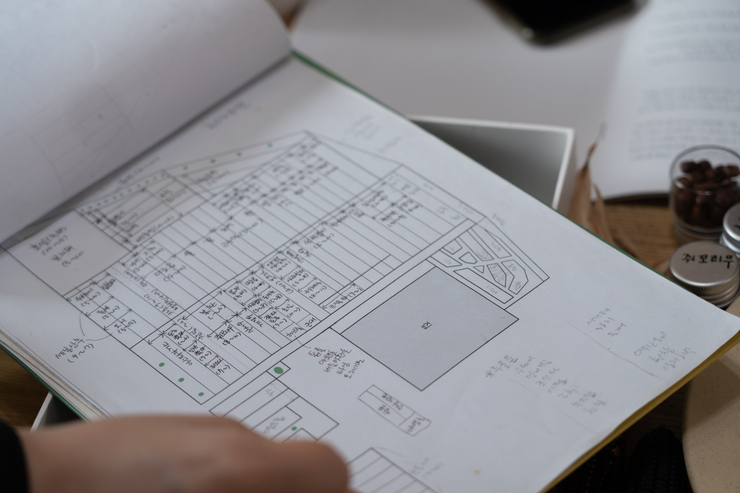
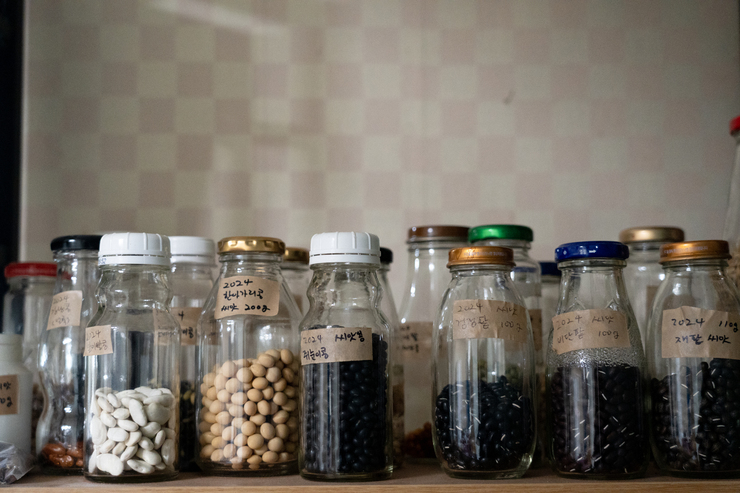
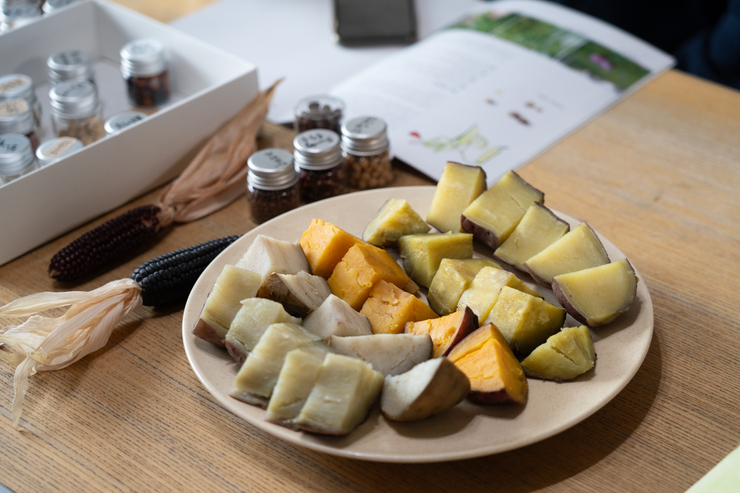
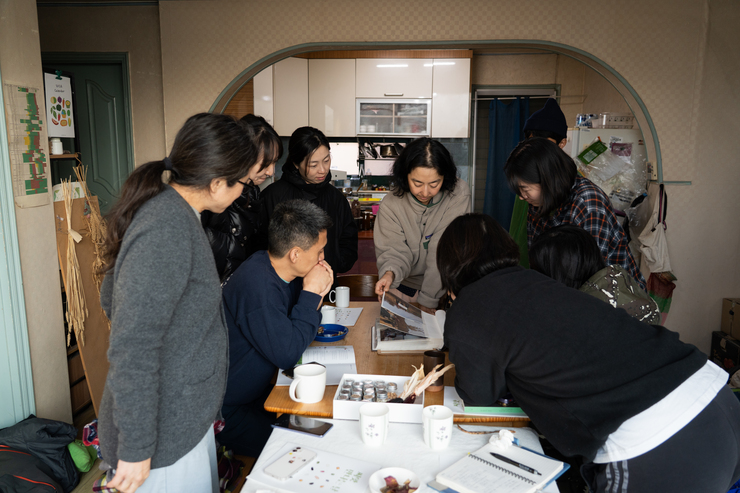
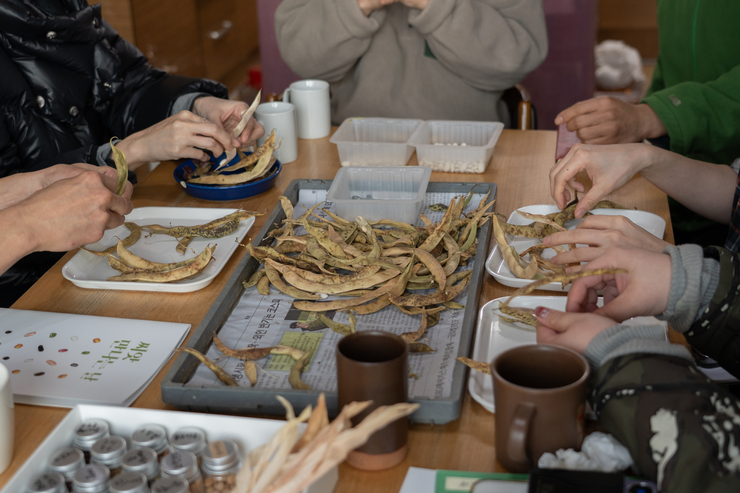
Photo by Kangsun Lee