

Seminar V - Marina (Morgan Jeong)
An audio piece edited by Marina, composed of sounds gathered during the field recording.

Sounds included the rustling of hands brushing against the microphone’s windscreen, whispers traded between microphones, birdsong greeting the autumn dawn, the flow of Yangjaecheon Stream, the susurrus of reeds growing along the water’s edge, the wind, the calls of narrow-mouthed toads, the bustling urban noise caught between sidewalk and road, and the sounds of the world outside.
—Han Munhee (Amo) (DCW 2025)
At an early hour before the break of dawn, when nature’s creatures wake from slumber and begin to make their most lively sounds, the field recording workshop began, moving from the studio to Yangjaecheon Stream.
Of all the useful information from the crash course Marina had prepared, what I remember most are things like the DIY field recording kit, assembled in a strangely perfect way using dry cleaning hangers, and the fluffy microphone cover (called a “windshield,” “windscreen,” or “deadcat”). I had always wanted to see one in person someday, and seeing it slipped snugly over the hard mechanical device like a sock or a fur hat, it was just so adorable, like a little pet.
I had a vague longing for field recording, for things like the long-running radio program In Search of Our Sound —starting with its familiar jingle and the narrator’s voice, followed by the gentle trickling of water or a warm folk melody—or the scene in One Fine Spring Day where fluffy-muffed equipment is placed here and there in a field of reeds to record the sound of the wind. The labor of moving across mountains, fields, rivers, and seas in search of those sounds felt beautifully unnecessary, and all the more romantic because of it. .
To encounter the sounds of nature, you must place yourself inside nature. You have to notice the sounds coming to you, trace them back to their sources, and adjust your bodily movement to fit the natural world. Approaching the muddy water’s edge at a precarious angle to dip in a hydrophone just to hear the stream; crouching down for the sounds of insects in the grass; deliberately taking a roundabout path for the pleasure of crunching fallen leaves underfoot; holding the microphone up to the sound of cars from under an overpass, a crow, bicycle pedals turning, the footsteps of people out running; learning the effort and joy of placing your body inside nature and tuning yourself to that ecosystem—this is perhaps the true charm of field recording.
I saw a slug slowly making its way across the surface of a wide rock. Perhaps due to the slime, its path left behind a shadow-like trace. Mesmerized by its movement, I watched it for quite a while. To the naked ear, it seems to make no sound at all, and yet the slug leaves behind the sound of its slow, steady movement. I was grateful to have been able to notice this sound, which I would have walked past without a second thought on any other day.
—Jihee Jun (DCW 2025)
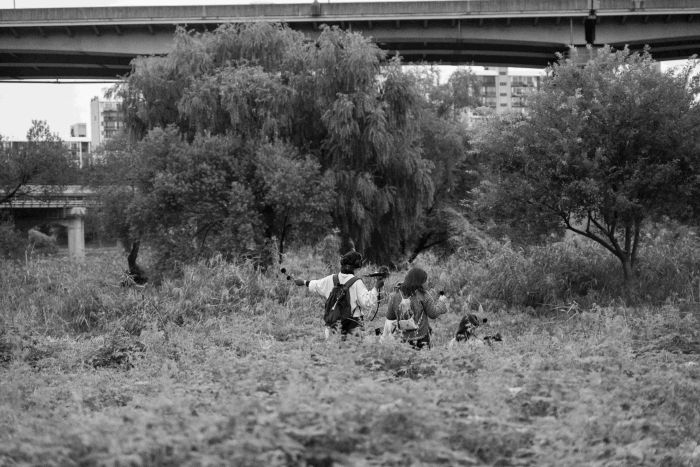
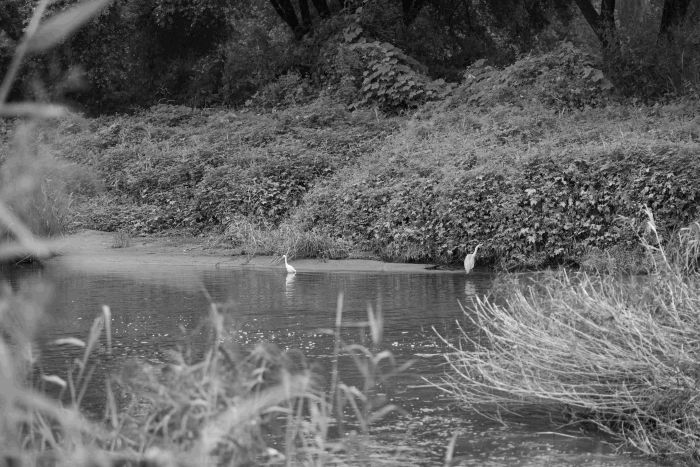
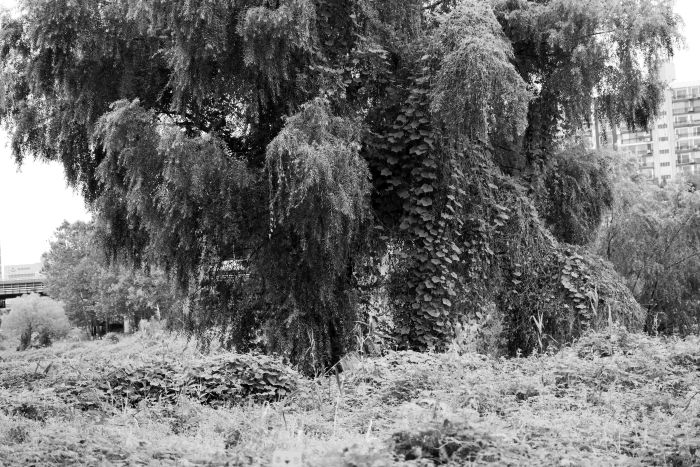
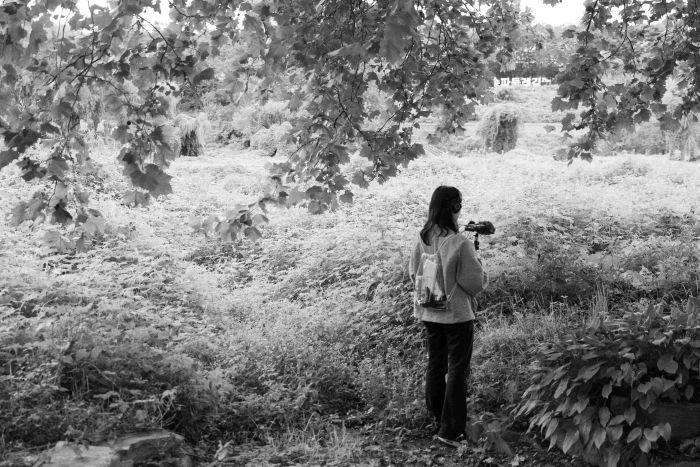
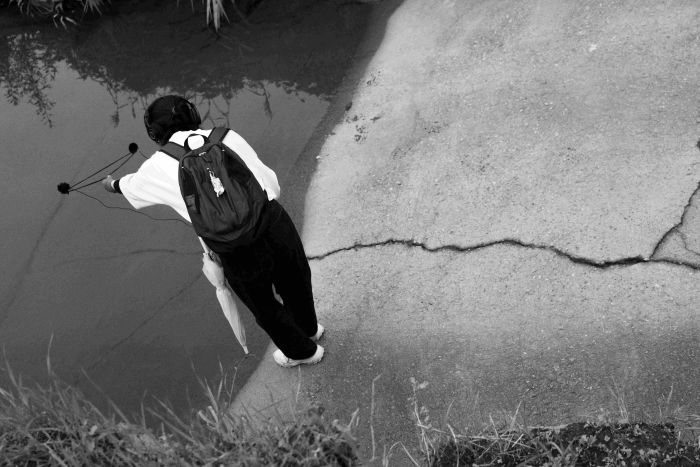
Photo by Kangsun Lee