

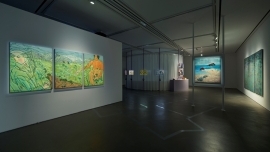
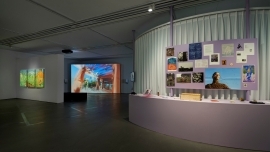
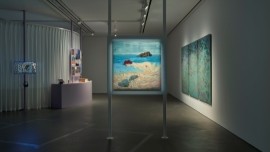
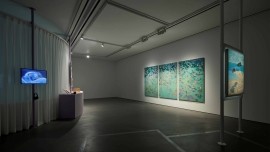
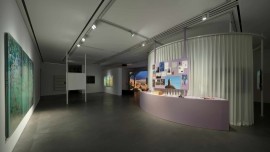
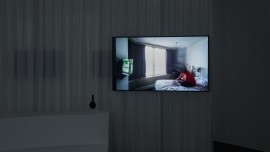
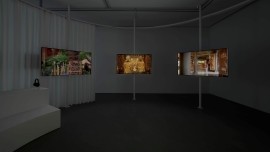
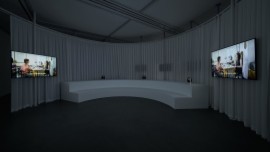
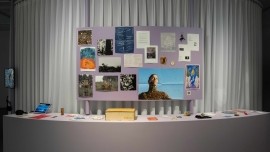
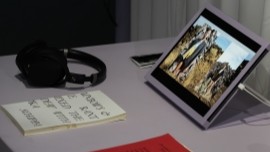
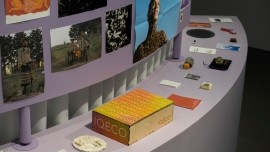
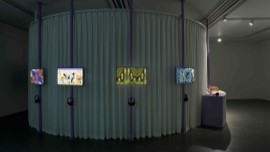
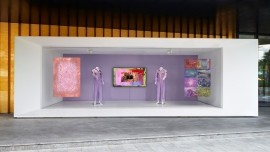
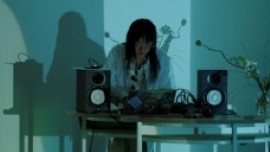
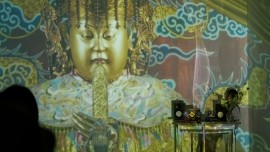
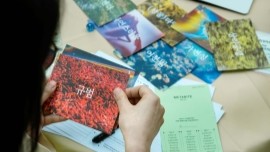
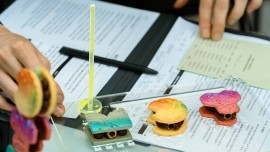
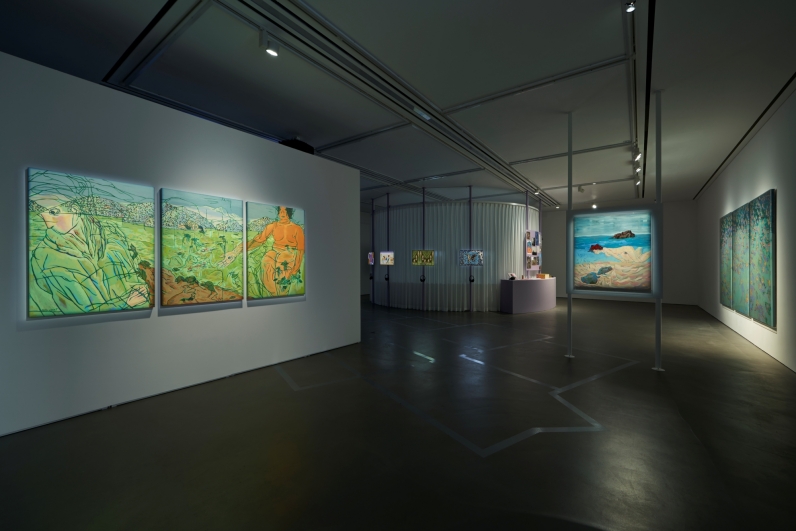
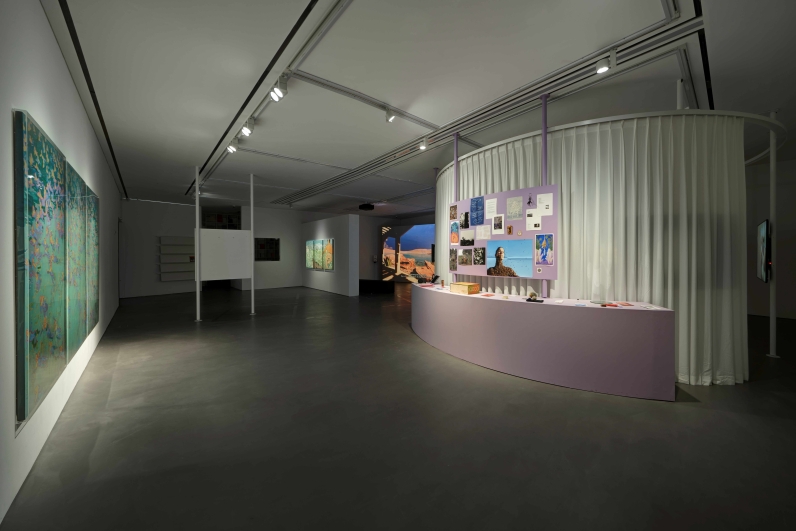
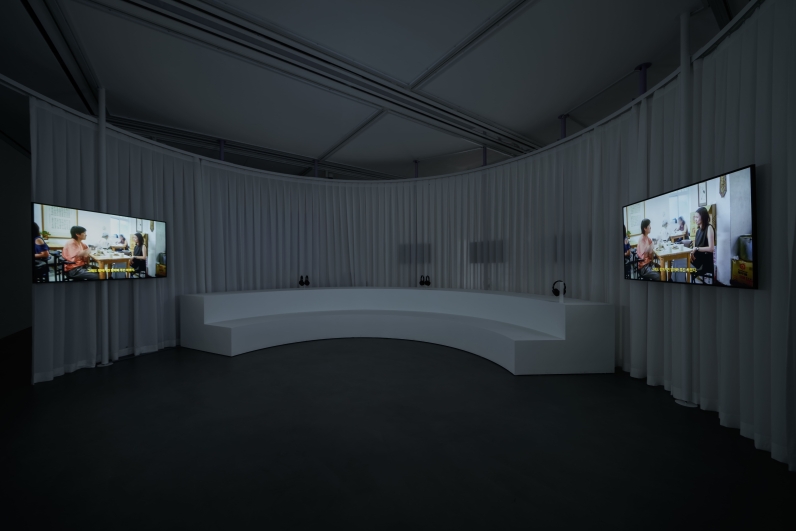
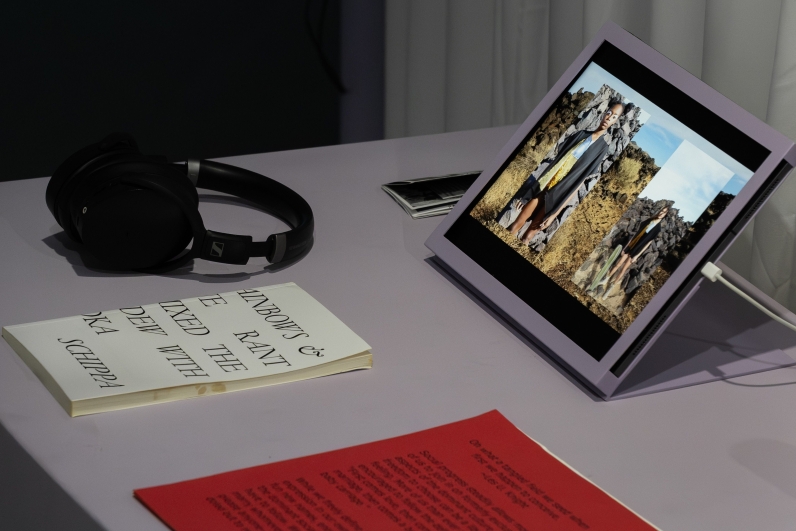
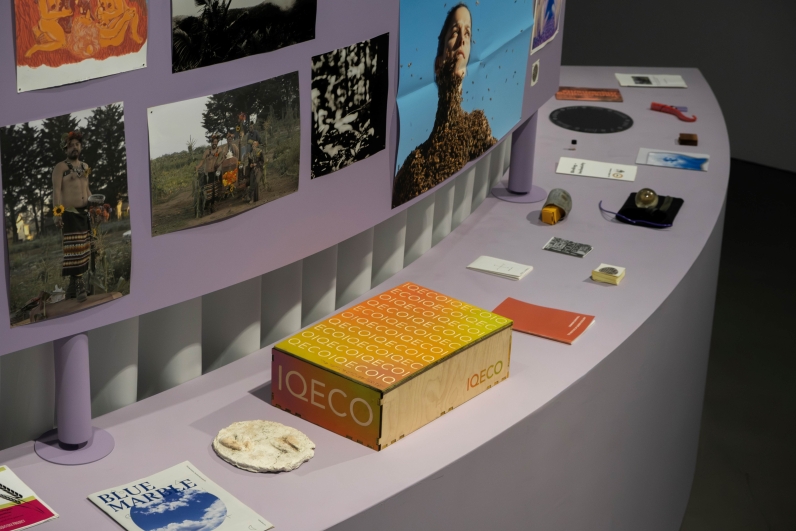
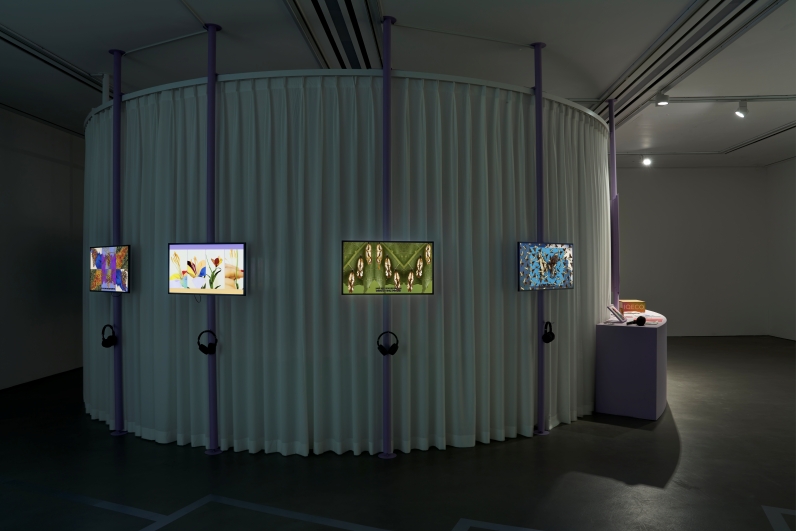
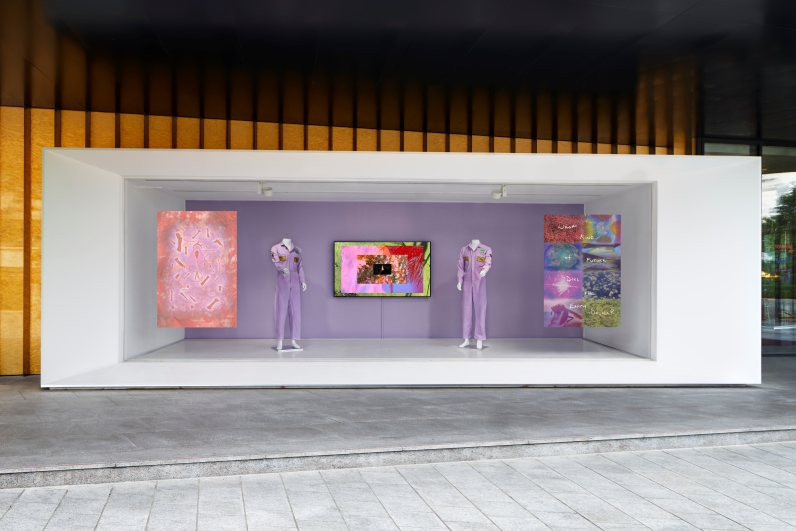
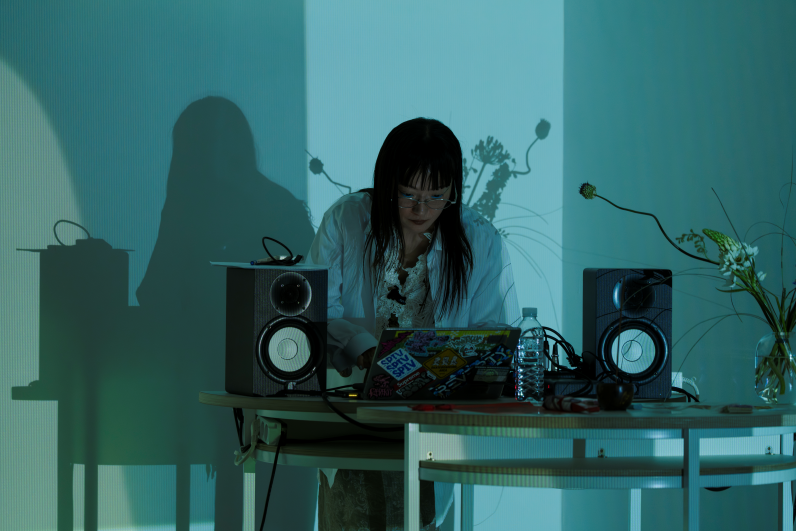
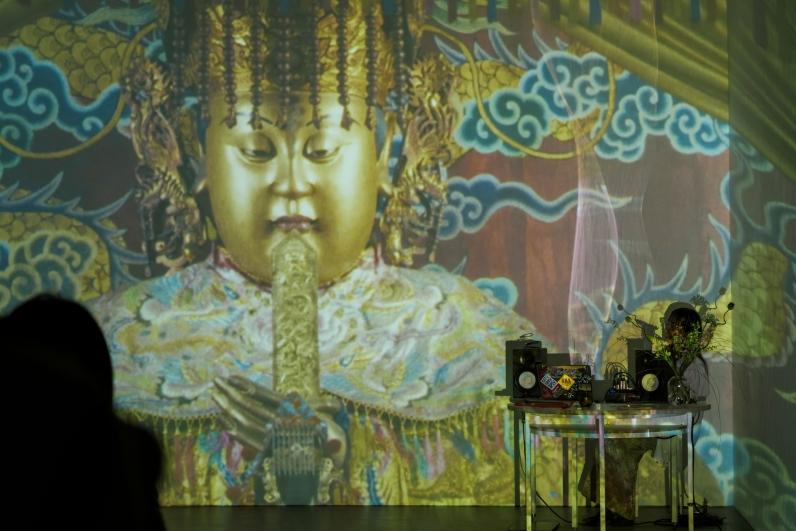
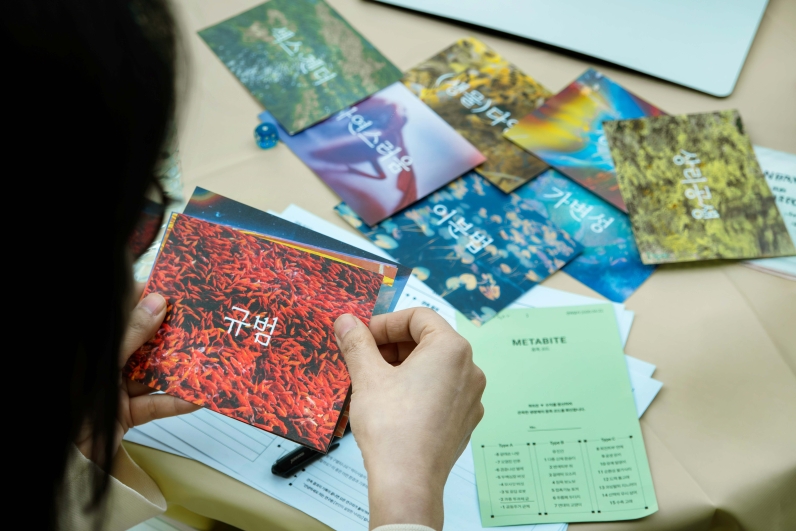
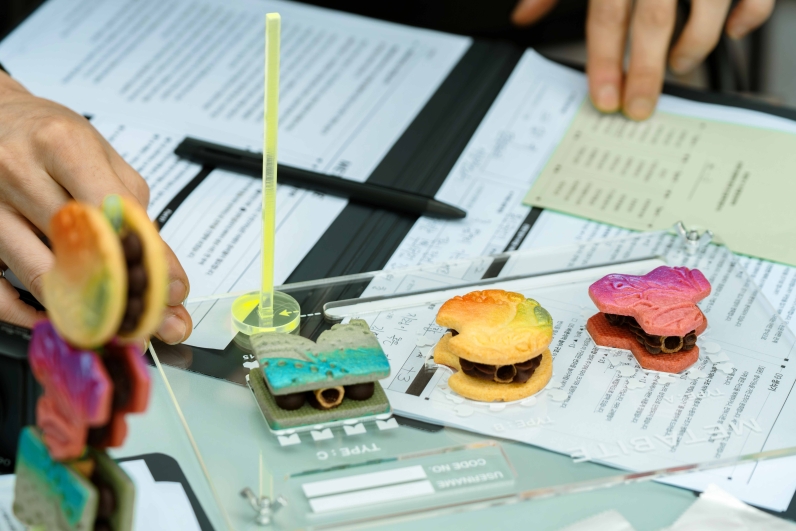
Installation view
Photo by Yeonkeun Choi
Tuesday-Saturday 11:00~19:00 / Closed on Sunday, Monday
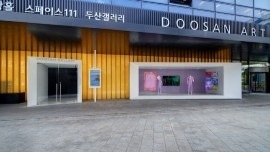
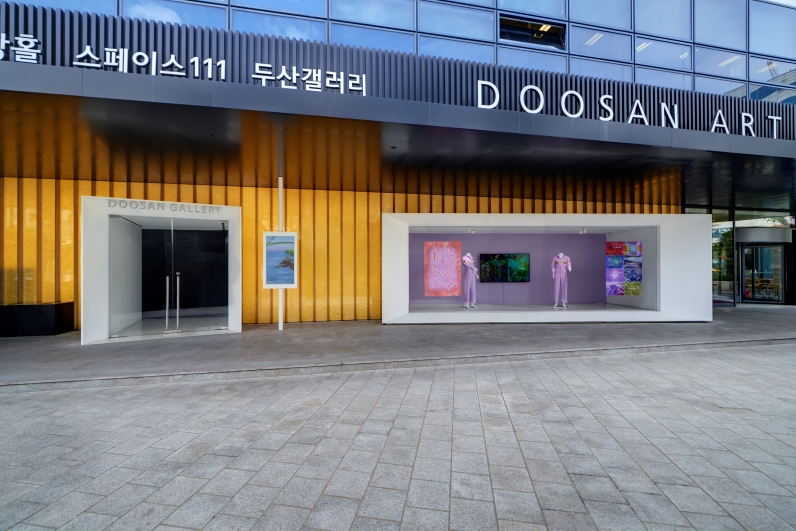
DOOSAN Gallery: 15, Jongno 33-gil, Jongno-gu, Seoul, Korea
Tel. 02-708-5050
Today’s world is filled with problems so vast and complex that they can at times feel like a cruel joke. The exhibition HUMORS examines how artists confront this reality, and how they reinterpret and respond to the contemporary moment through their own languages and sensibilities. The exhibition HUMORS begins from this sensibility. Here, “humor” does not simply mean jokes or wit; if one must put a word to it, it is closer to a kind of satirical warmth.[1] It is not laughter that lets one pass lightly over a situation, but a sensibility that emerges only after looking all the way through. In this exhibition, humor appears not as a way of lightening reality, but as a way of twisting it into something strange, making it visible again. The participating artists each engage with the present in their own ways, yet they share a common impulse: rather than accepting reality as given, they attempt to layer other dimensions onto it.
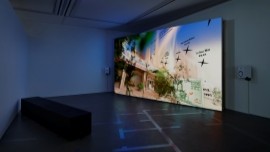
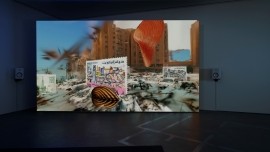
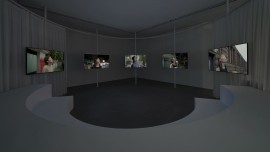
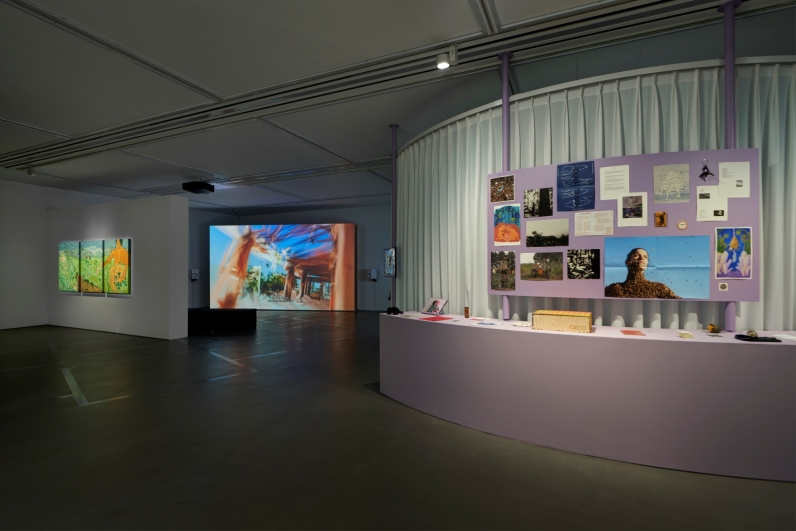
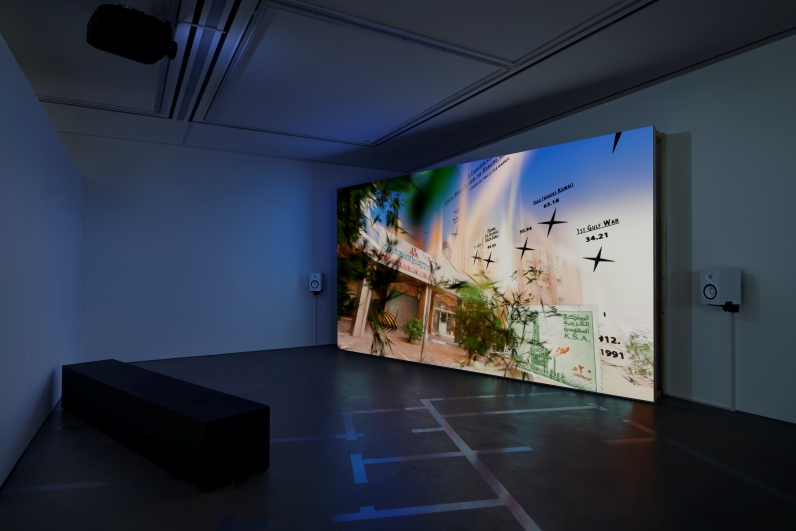
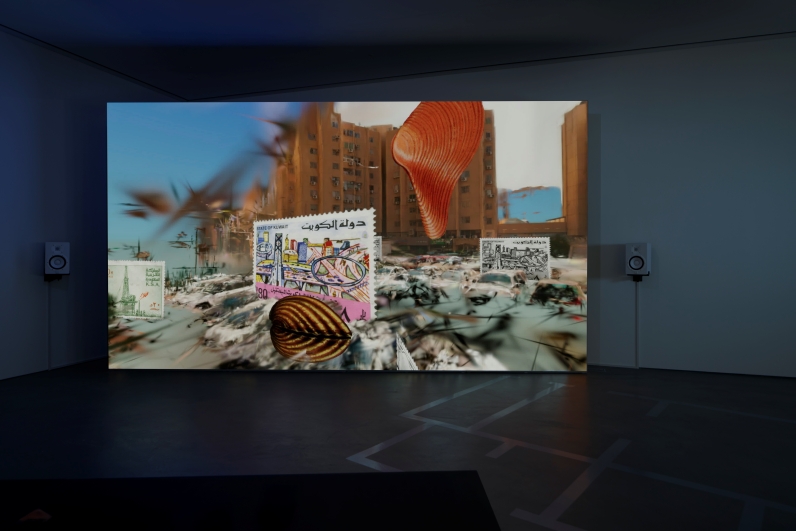
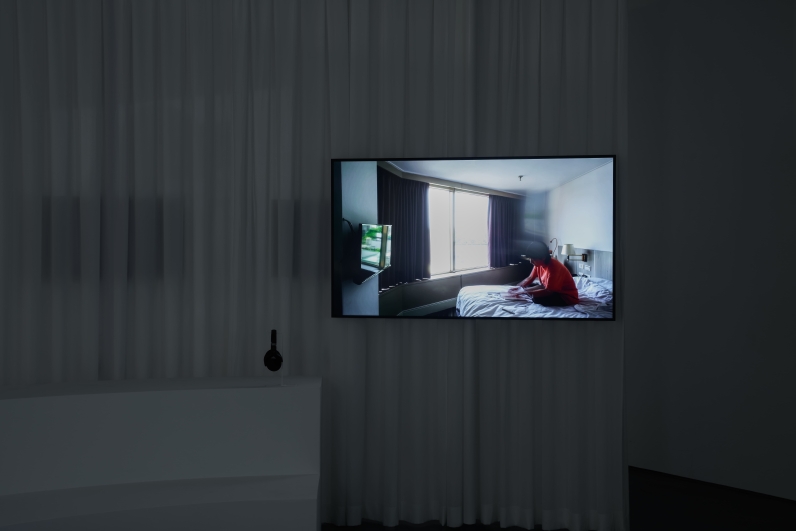
In Ayoung Kim’s work, this impulse becomes narrative—a tendency toward overturning reality. Unlike her recent works, which seem to advance into an endless unknown, her earlier works—Tales of a City (2010) and Ephemeral Ephemera (2007–2009)—are grounded in a realistic awareness of actual events and the artist’s persistent research. The work presented in this exhibition, Al-Mather Plot 1991 (2025), reconstructs this earlier approach together with the accumulated imaginative worlds she has developed through her practice, intertwining them with personal memory. Set against the backdrop of the Al-Mather housing complex in Riyadh, Saudi Arabia, the work intersects the history of the Gulf War with the artist’s family experiences. Built by a Korean construction company, the site once served as temporary housing for Kuwaiti refugees and is also connected to the artist’s father’s time there.
As video, 3D simulation, maps, interviews, and archival materials overlap, the work forms a scene where multiple times and memories intersect, rather than a linear narrative. Through this, the artist does not simply reproduce a heavy and complex historical narrative, but twists it into another dimension, operating as a sensibility that renders strange the very way we understand reality. This is not a gesture of lightness, but rather an unfamiliar rupture that emerges from pushing through layers of history and personal memory to their limits.
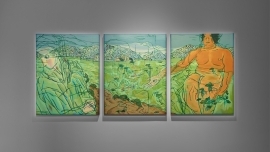
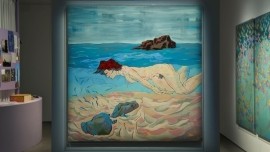
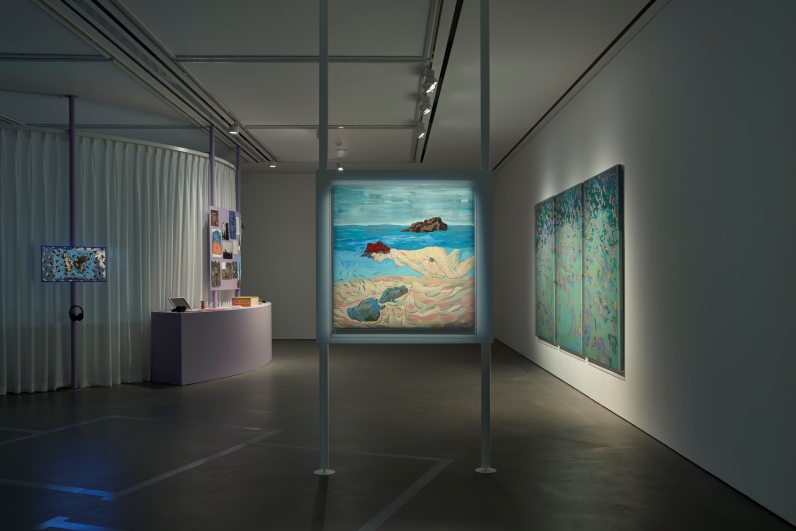
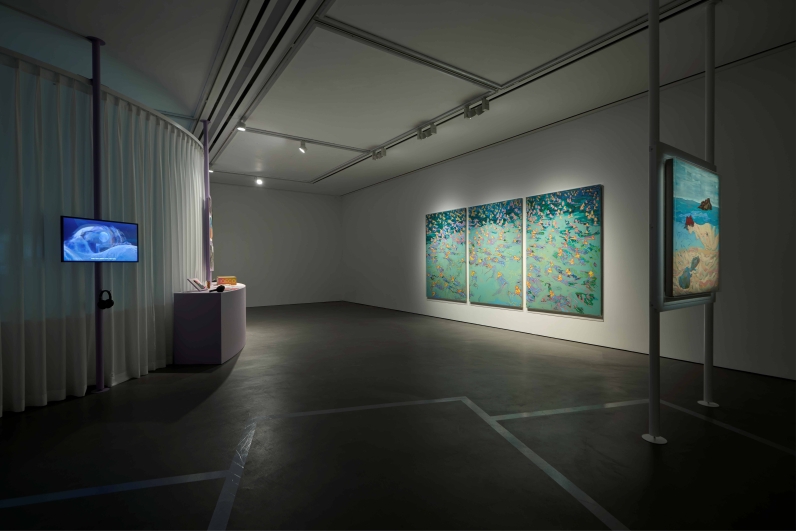
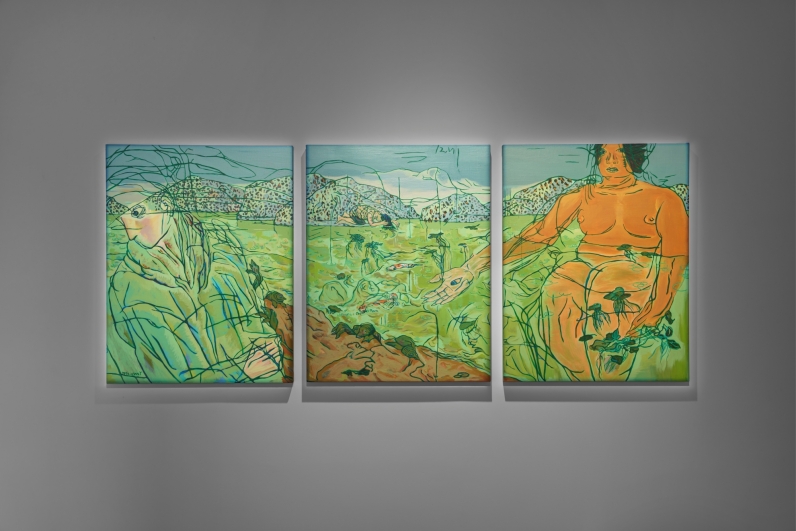
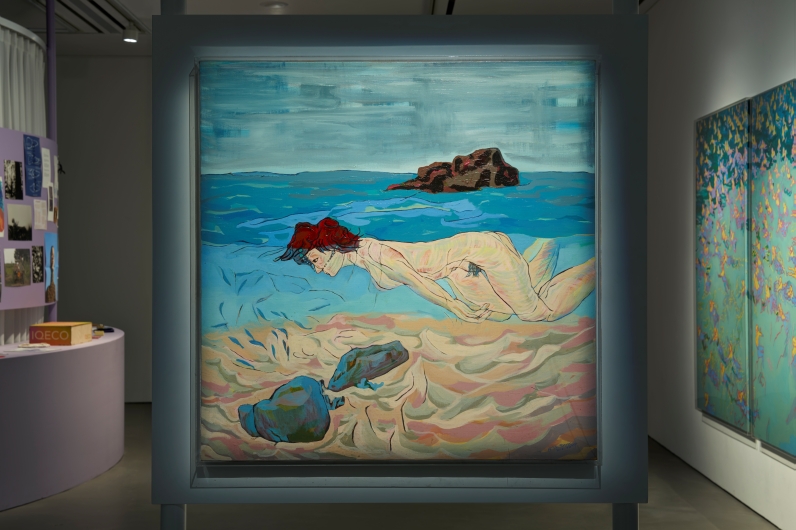
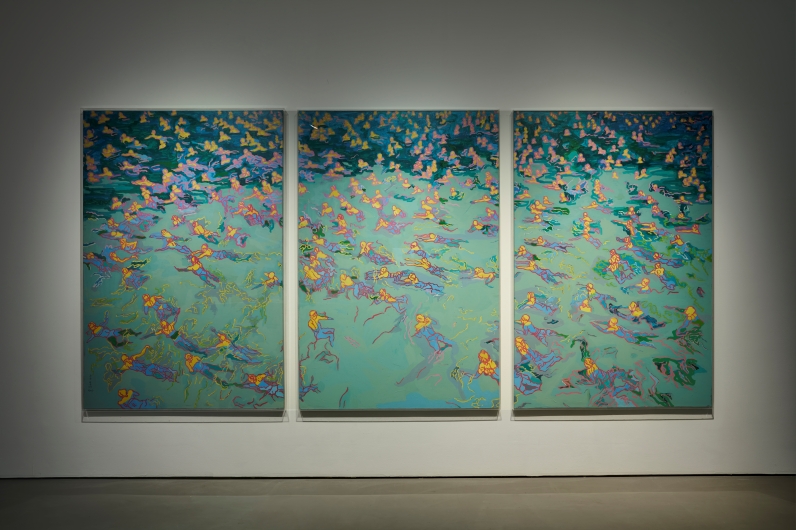
Bang Jeong-A’s paintings depart from everyday scenes, yet they reflect the present world from a different angle. She does not pass over the ecology of her region, the rights of animals and plants, or the contradictions within her surrounding society. This sustained attention leads her beyond the studio into direct engagement and participation. In turn, her canvases remain flexible even when addressing weighty subjects such as the environment or politics. Rather than dwelling in sympathy or guilt, she works through humor and distance.
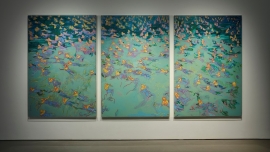
In the new work So-nagi (2026), presented in this exhibition, figures beneath the water’s surface reveal different states of being. Some appear to have already reached a certain calm, while others barely manage to breathe. As the artist describes it: “Although the situation is unstable, some seem to have found peace, while others are barely staying afloat, expelling water. It is perhaps an image of ourselves, struggling and gradually coming to understand as we search for ways to endure within a fragile planetary condition.” These scenes evoke how, under unstable conditions, we each endure the present in different ways. This continues the trajectory of works such as Crowd Swimming (2017) and Rather Not Think (2015), reaffirming the artist’s ongoing exploration of human existence in states of imbalance.
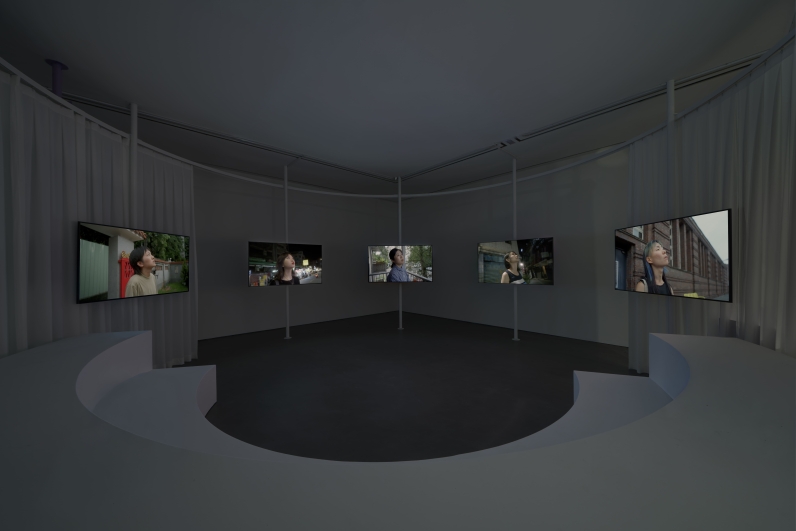
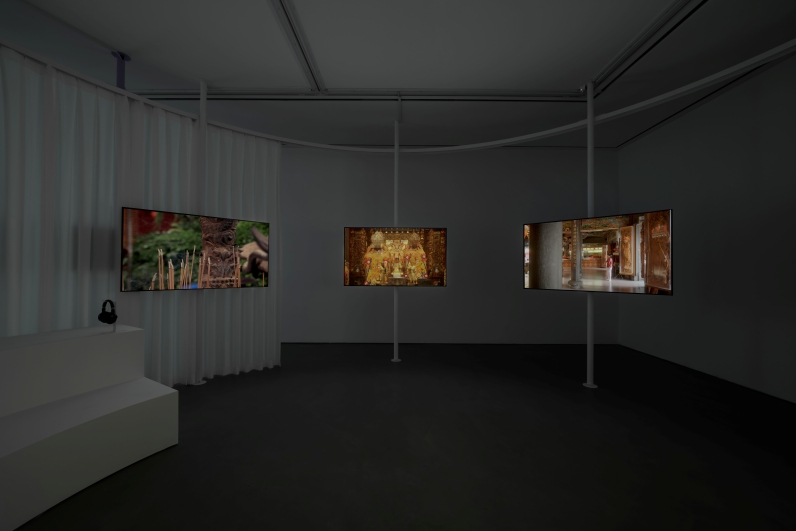
Mooni Perry uses ritual and narrative to reveal the tension between collective memory and social structures. Like her earlier works—Binlang Xishi (2021) and EL (2025)—she builds her stories around figures who are present yet rendered invisible. The work Missing (2024), included in this exhibition, follows the condition of disappearance. The work captures points where folk beliefs, ghost narratives, and contemporary systems intersect in specific regions of Taiwan, asking how invisible presences are remembered and forgotten. Moving beyond mere ation, it reveals the emotional and political dimensions surrounding disappearance, while tracing how personal experiences of loss transform into collective memory. Ultimately, Missing presents the state of being unfound not as a fixed conclusion, but as an endlessly generative field of narrative—prompting us to think critically about what we are structured to remember and what we are made to forget. Through overlapping research and interviews across East Asia, mythological storytelling, and personal experience, the work refrains from defining what has disappeared or why. Instead, it evokes the instability of memory, identity, and perception after loss. In this way, the artist regards disappearance not as absence but as a condition for new creation, revealing a journey that seeks the possibility of new narratives and sensibilities between what is invisible and what remains.
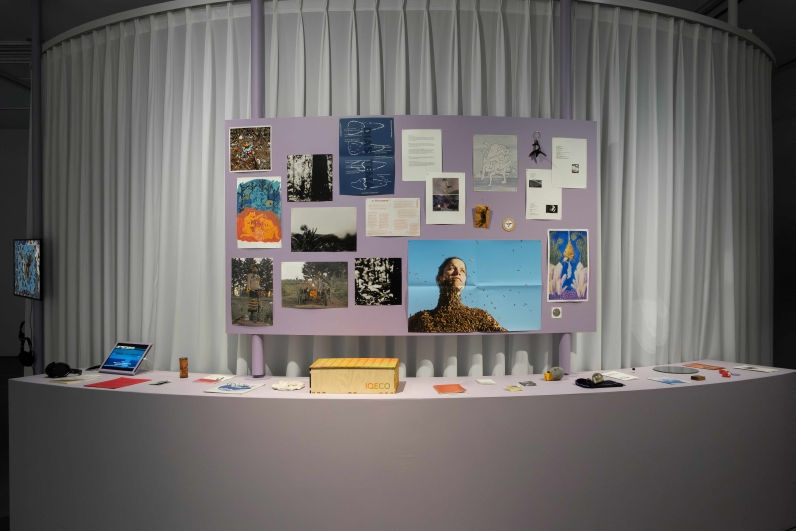
The Institute of Queer Ecology continues its practice by imagining worlds beyond anthropocentric order and making declarations about other ways of living. Co-run by Lee Pivnik and Nicolas Baird, the collective draws on queer theory, ecology, and digital aesthetics to understand “nature” and “identity” not as fixed but as relational and constantly shifting. This exhibition surveys their collaborations and projects in archival form, while Metamorphosis (2020), which runs through their worldview, offers the clearest articulation of their position and approach. One of IQECO’s key projects, Common Survival (2018), explores how various species and beings become entangled in coexistence, beyond human-centered notions of survival. It redefines survival not as competition or adaptation but as a process of relation and interdependence, blurring boundaries between human and non-human, organic and digital beings. In particular, the way it uses online platforms and virtual environments—where participants take on roles within a shared ecosystem and build narratives together—experimentally enacts the decentralized worldview IQECO pursues. Ultimately, their work uses the question of “surviving together” to ask again what kinds of beings we are connected to, and in what ways.
[1] Michel Schneider, Schumann: Landschaften der Seele (Korean trans. Kim Nam-ju, ThatBook. Co., 2014), pp. 120–141. The exhibition borrows its title from ‘Humor,’ used as a performance direction in Schumann’s piano works. Here, Humor refers to coloring a state with its opposite—an integration of the most external (humor) and the most intimate (mood), a fusion of contradictory elements.
* To mark the 15th year of DOOSAN Curator Workshop (DCW) in 2025, the "DCW Open Call Exhibition" was newly started to invite past DCW Alumni (2011-2022). Through this initiative, DOOSAN Gallery aims to revisit and share the diverse curatorial experiments and practices of curators who have previously participated in DCW.
Curated by Goeun Song (DCW 2017)