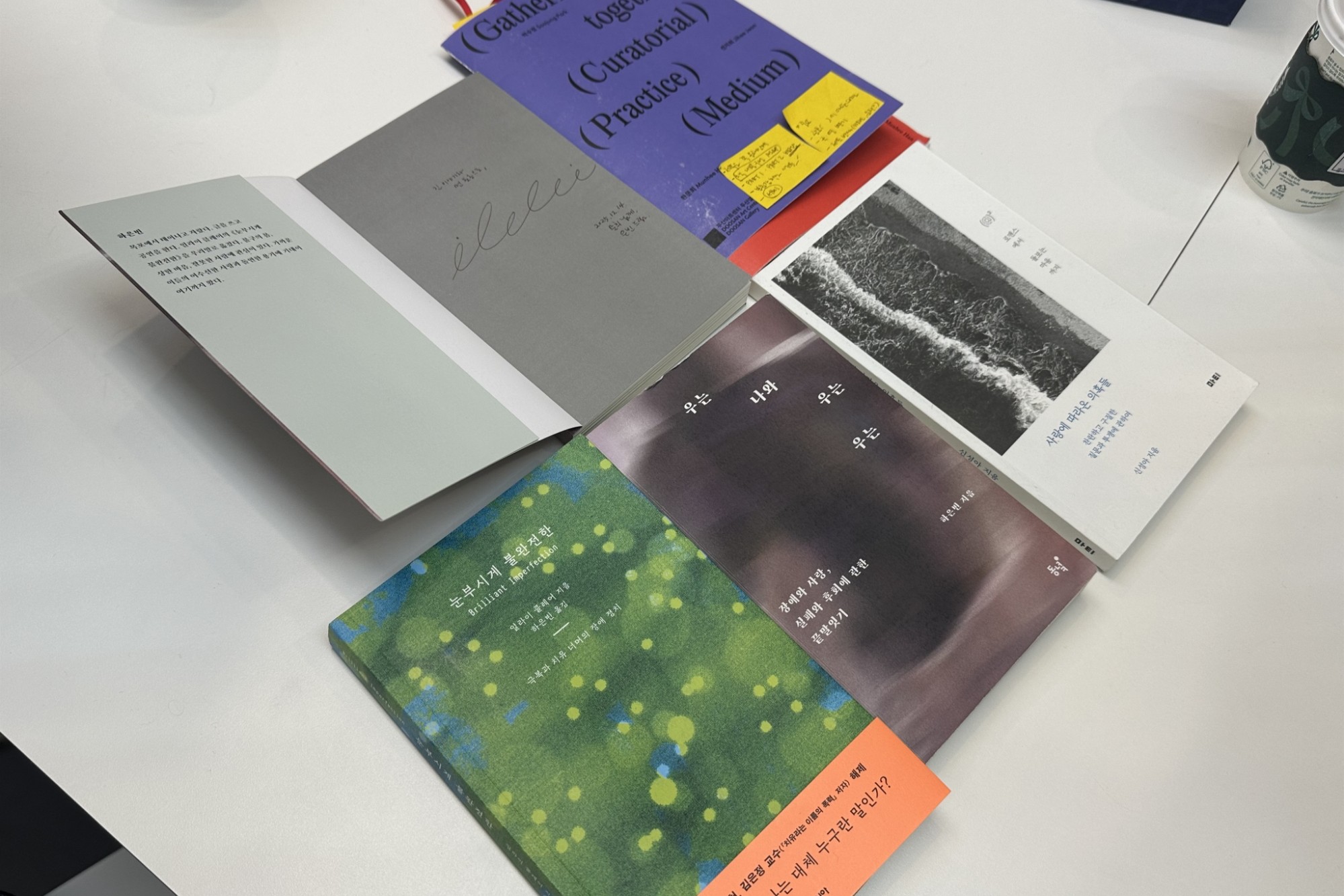
Seminar Ⅷ - Ha Eunbin
Those who live through a time of caregiving, and those who have passed through it, come out wearing a different skin. The time spent learning to entrust another’s body to yourself, or vice versa; the time spent in company, eating together, wiping bottoms and cleaning up after, over and over; the time through which you became all too fluent in self-reproach, regret, and the search for something to blame. When we speak and write about caregiving—an experience so entirely grounded in relationship, and for that reason so singular, so luminous, and so precarious—how do we allow ourselves to be honest with ourselves?
As Ha Eunbin put it, writing from personal experience invites double criticism. The demand to “stop passing through others’ stories and tell your own” arrives alongside accusations of “self-pity, self-indulgent writing.” And yet it may be precisely when we take on the risk of being indebted to someone, of passing through them, of handling them within the writing, that better writing becomes possible.
In my own case, whenever I tried to write about my personal experiences of caregiving, I would end up trapping myself in endless self-censorship and questioning: whether it was narrow thinking based on too limited experiences, whether my writing romanticized caregiving too much, whether it might hurt someone, whether my choices were reinforcing some accidental bias or myth. I have now decided to be a little more generous with myself; to stay faithful to the story that could only be told in that moment; to recall and describe in detail the various dynamics, emotions, and memories within that caregiving relationship; and to piece together the moments, however fragmented, and trace a narrative from them.
—Jihee Jun (DCW 2025)