

Photo: Five Rooms
2016
Installation view
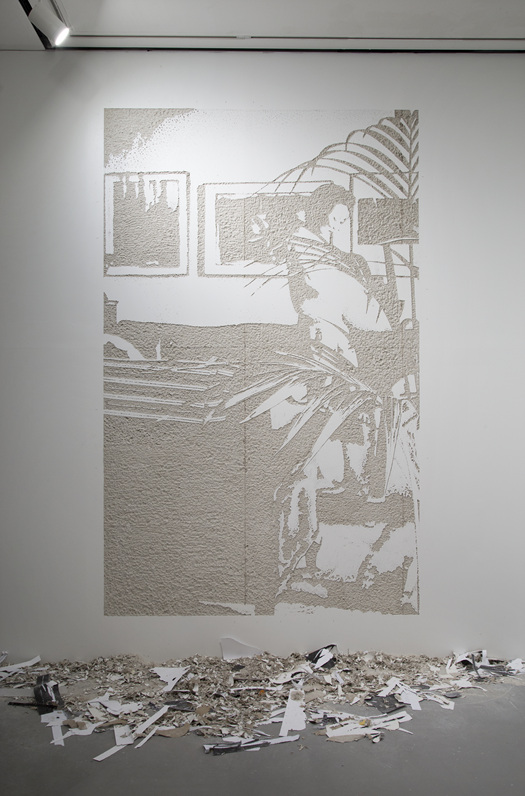
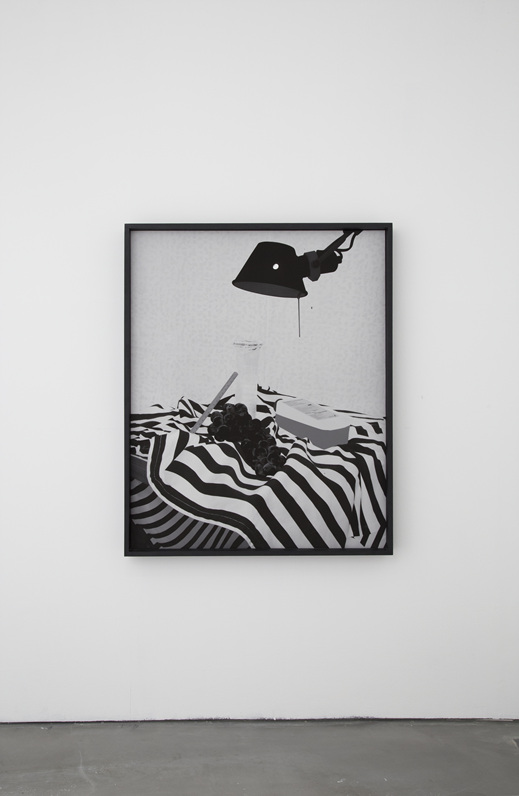
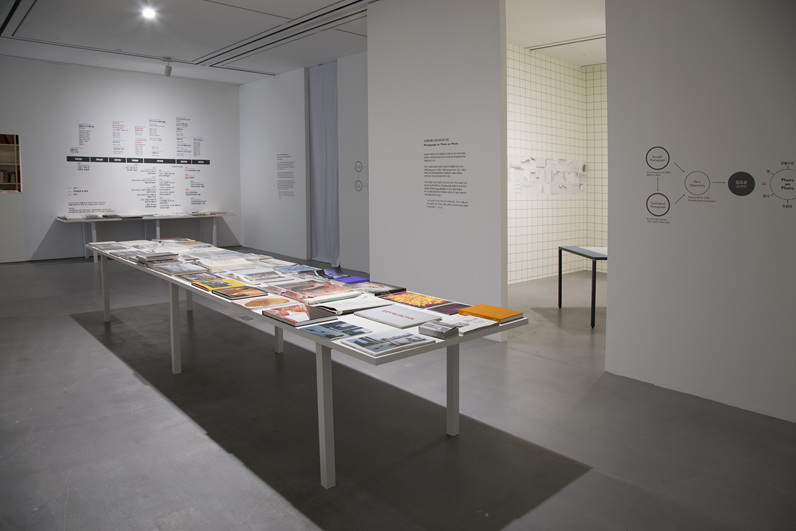
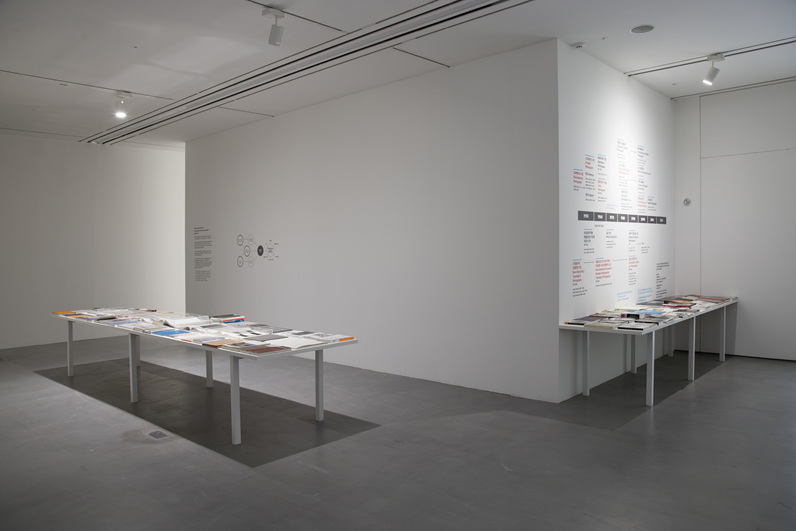
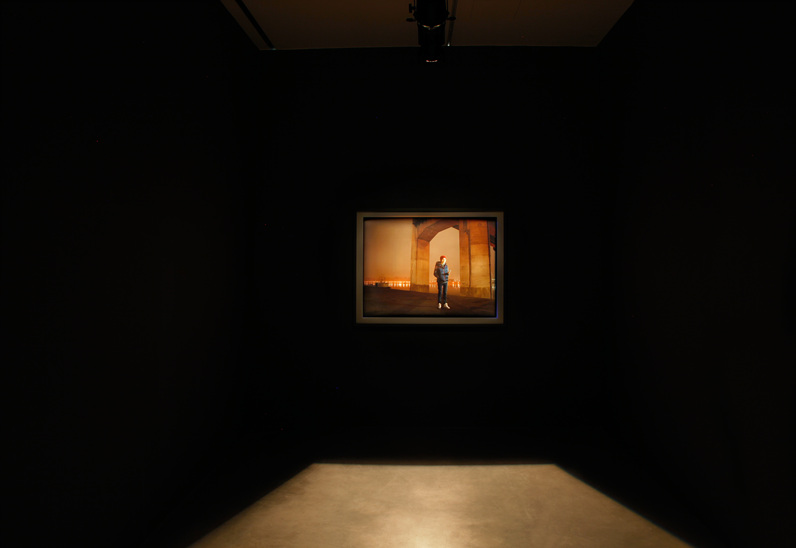

Opening Reception: 6-8pm, July 14st, 2016
DOOSAN Gallery Seoul: 15, Jongno 33-gil, Jongno-gu, Seoul, Korea
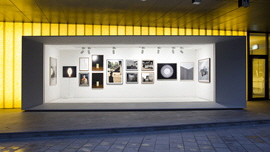
DOOSAN Gallery Seoul is pleased to announce a group exhibition, Photo: Five Rooms from July 14th to August 27th, 2016.
Focusing on works by five prominent artists in Korea, the exhibition focuses on observing the present status and the future possibilities of Korean contemporary photography.
Until the early 20th Century, the camera was an instrument which re-presented reality the way it is. The photograph was deemed a replacement of the actual subject, and due to this conventional notion, photography during Impressionism came to replace the representational function of the painting.
In the contemporary age, photography came to be seen as a medium through which to express the artist’s thoughts and imagination, and something more than just a ‘documentation of the visible world.’ Today, countless artists use photography as a medium of a completely new concept, and photography has broken free from its traditional realm of use and has firmly established itself as a genre of contemporary art alongside painting and sculpture.
While many artists in Korea also use photography as their main medium, the aesthetic, art historical and critical dialogue on photography is somewhat lacking. This exhibition hopes to function as a site of discussion on the present status and future directions of photography as a contemporary art practice and contribute to an in-depth discourse on photography at large.
KDK (b. 1973, Gwangju, Korea)
- Photography as Photo on Photo
KDK’s photographic works render the crossing point between the artist’s point of view and that of the camera into pure form. They explore the relationship between camera and point of view, and the fundamental difference between the perspective of the mechanical device of the camera and that of human.
KDK’s work transforms the 3-dimensional subjects in reality to 2-dimensional representations through the formative language and mechanism particular to photography including elements such as shadow, texture, sharpness, point in time the photograph was taken, frame, vantage point, depth and exposure. In this sense, his work differs from painting in its basic method of approach, and these qualities are what stand out as important characteristics of his photography.
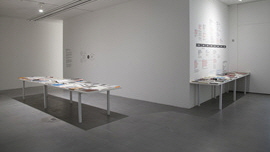
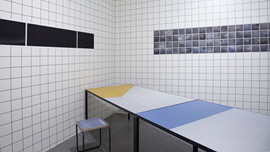
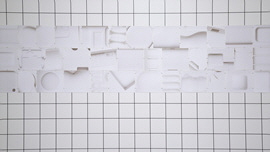
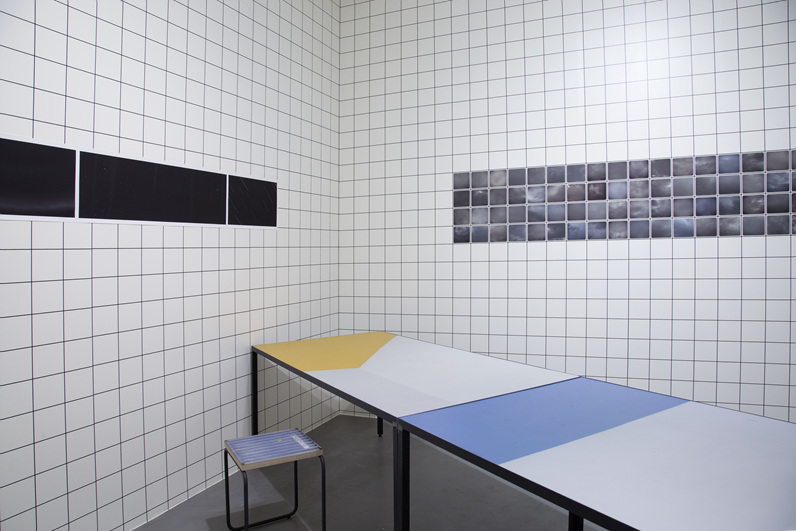
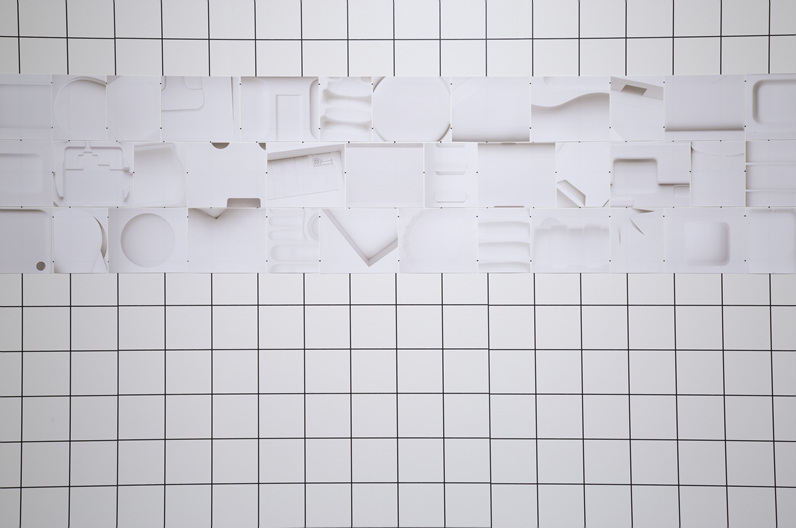
In this exhibition, KDK’s studio with tile walls from 2011-2013 is reproduced in the gallery, and horizontal and vertical elements which often appear in his work becomes the underlying motif again. He shows the recent works - including B series which treats each grid as an exhibition space and focuses on the color black as the subject, or the P series which focuses on the element of form in disposable packaging -- as if they were proposals put on the walls of his studio. In addition, a portfolio of the artist compiled from the early period of his photographic practices is to be shown on the table placed in the center of the exhibition space.
Taedong Kim (b. 1978, Seoul, Korea)
- Photograph as Semi-Constructed Documentary
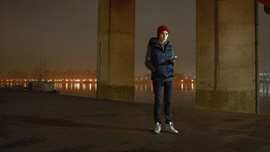
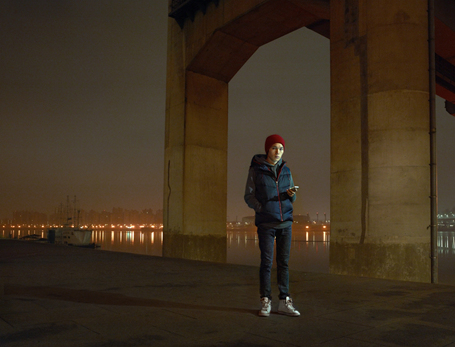
Kim’s work sheds light on the meaning behind people and spaces of contemporary era while also pursuing a sense of perfection through qualities of documentary photography which records reality, and the aesthetic standards of straight photography such as light, illumination, time and frame.
While straight photograph of the past merely captured the subject relying on the technicality of the camera, Kim works with a semi-constructive attitude which stages a portion of reality in order to capture the artistic intention of the artist, thereby demonstrating the aesthetic nature specific to camera and photography.
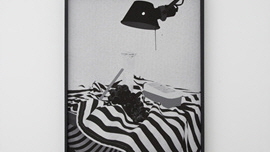
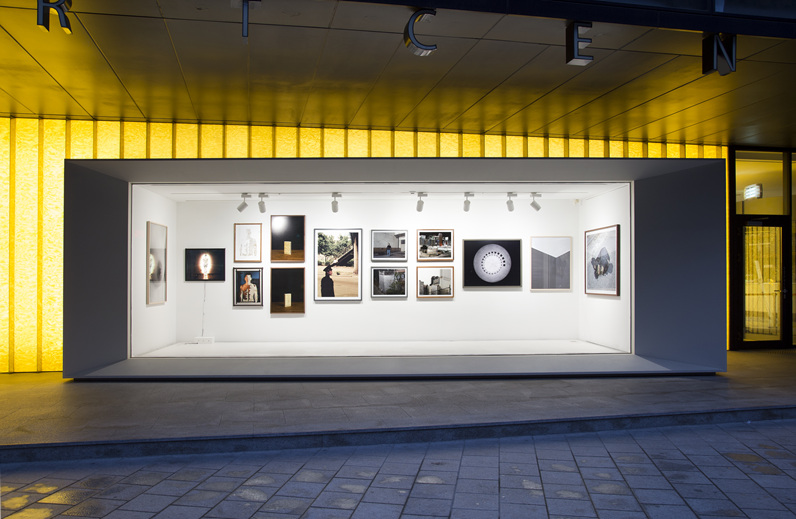
In this exhibition, Kim presents works which implicatively illustrate the many decisions at various levels which must be taken for one photograph, and how a new photograph is formed through such process of decisions. There are many elements which must be decided besides the fundamental selective elements necessary for shooting a photograph, such as composition of space, distance from the subject, editing and even aspects of the individual style. Such process of deciding and making choices is comparative to formative techniques in painting. Kim illustrates the essence of photography that’s different from other genres, by demonstrating that while there may not be an original photograph, there is always an independent and unique perspective and point of view, and that a photograph can change completely depending on the perspective of interpretation.
Seung Woo Back (b. 1973, Daejeon, Korea)
- Photograph as Picture on Picture
While acknowledging the traditional role and status of photography, Back’s random collection of photographs as reflections of the world become the medium of his work which subverts, redirects, or even displaces the existing photographic language to re-contextualize the original meaning of photography.
Through such strategy, Back maximizes the extensibility of photography in terms of its medium, and also tries to illustrate new form and concept in photography in the contemporary age.by suggesting de-signifying and de-contextualizing mechanisms using the indefinite and unstable attributes of photographs he randomly collected.
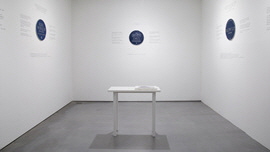
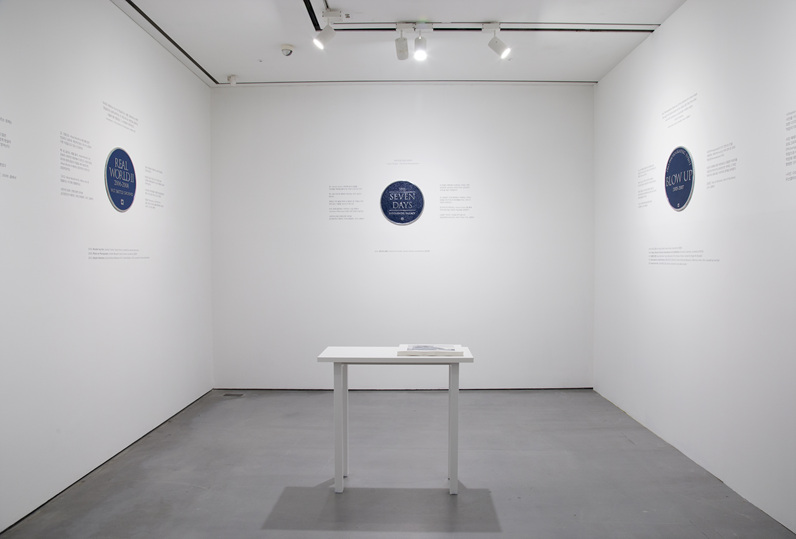
Five ‘Blue Plaques’ (copper plates that permanently commemorate famous figure or historical events in public spaces in England) from the artist’s major exhibitions in the past are selected and presented in this exhibition. The five Blue Plaques are: REAL WORLD I, REAL WORLD II, BLOW UP, UTOPIA, and SEVEN DAYS. By exhibiting the works along with text which implicatively demonstrate the main concepts of the five exhibitions, the artist desires to reflect his work through a meta-critical perspective.
Taewon Jang (b. 1976, Seoul, Korea)
- Photograph as Time, Light and Shadow
Based on exploration on ‘light’ and ‘shadow’, the fundamental elements of camera and photograph, two large tendencies mark Jang’s work.
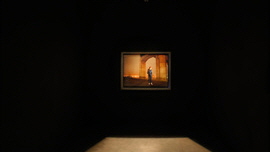
The first tendency is to demonstrate, through straight photographic works, how elements of ‘light’ and ‘time’ penetrate the camera to become an image. The second tendency in his work is to question the essential meaning of photography by conceptually grasping the essence of ‘shadow’ as a reflection of ‘light’ in photograph.
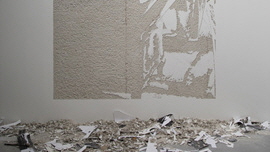
Through installation work which eliminates shadow - the reflection of light, Jang frankly demonstrates that the difference between photograph and image ultimately lies in light and shadow, and goes on further to declare how photography today came to have a particular artistic form and content.
Heeseung Chung (b. 1974, Seoul, Korea)
- Photograph as Phenomenological Reduction
Chung’s photographs are a trace of the artist’s efforts to capture beyond the perceptive world in which figures and objects remain a temporary phenomenon, to show the essential nature of her subjects.
Chung ceaselessly strives to capture the existing essential truth beyond the subject that is experienced through the perception of the individual. However, the subject captured in the camera ultimately remains that of sensorial truth, and therefore, Chung’s works illustrate the idea that we can’t help but continue to question the essential meaning and origin of photograph itself in her work.
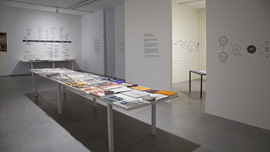
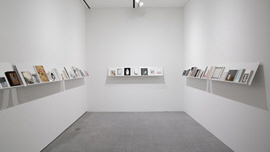
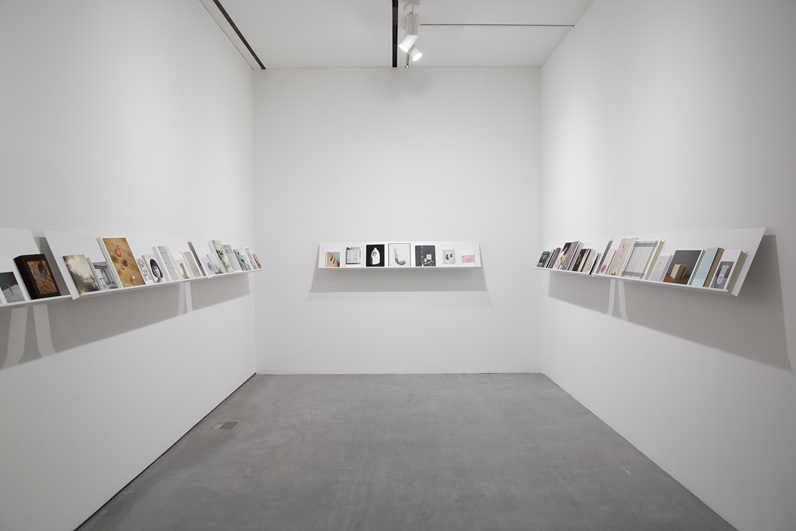
In this exhibition, Chung shows a photo installation titled The Role of the Good Neighbor. She covered 54 books and art books which deeply inspired or moved her with dust jackets produced from her photographs. By doing so, the intention was to conceal the authority endowed upon the name of the original authors of the books, and to focus on the voice. Inserts of quotes or images arbitrarily taken from the 54 books without citations are put into some of the 54 books in the hopes for the reader to indulge the pure act of reading between the opened page and the insert when he or she discovers the insert while flipping through the pages. Chung expressed that ‘the focus of interest in this exhibition lies not on reference but on inspiration, and not on identity of the artist but on adjacency, meaning closeness in relationship’.